
PERMIT UNDER FIRE
A GUIDE TO DEFENDING YOUR ENVIRONMENTAL AUTHORISATION


You’ve spent three years, millions of Rands, and countless hours in boardroom battles to secure your Environmental Authorisation (EA) or Water Use Licence (WUL). With the permit finally in hand, the real work begins. You assemble a specialized project team, greenlight the detailed engineering designs, and finalize the appointment of a main contractor.
Then, just as the site establishment begins and your excavators are fuelled up, an email hits your inbox. It’s a Notice of Appeal.
In that single moment, the law pulls the handbrake. The project timelines you’ve carefully managed are instantly shattered. If your contractor is already on-site, you are now bleeding “standing time” costs every day the site is quiet.
Suddenly, you aren’t just a developer anymore, you’re a respondent in a legal battle where every day of delay has a direct, compounding impact on your bottom line.
As an Advocate, I see this “stop-work” crisis play out far too often.
The “suspensive effect” of an administrative appeal is a project-killer if you don’t know how to handle it. Here is the strategy you need to protect your investment.
The Immediate Crisis: The Suspensive Effect
In South African environmental law, an appeal isn’t just a complaint. Under both NEMA and the Water Act, the moment an appeal is lodged against your Environmental Authorisation (EA) or your Water Use Licence (WUL), your decision is automatically suspended.
The Trap: I’ve met developers who think, “We’ll just clear a little bit of bush while we wait—it’s minor work.” Don’t do it. Continuing activity while a permit is suspended is a criminal offence. It can lead to heavy fines, jail time, and the permanent revocation of your permit, licence or authorisation.
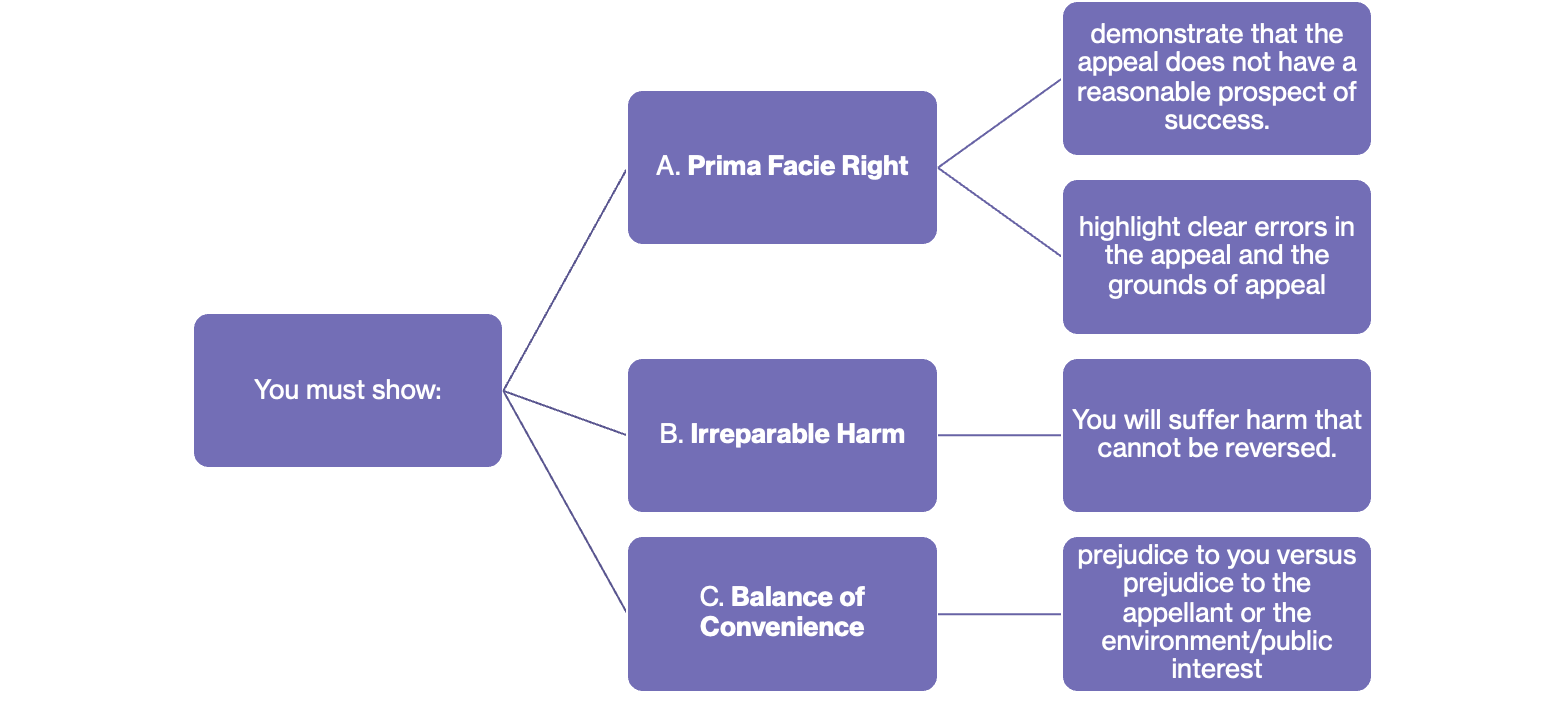
The Lifeline: If a shutdown means financial ruin or irreparable harm, such as the massive wasted costs of a standing contractor, you don’t just sit and wait. You immediately apply for an order to lift the suspension on the licence or authorisation. If you can show Good Cause, the Minister or MEC can lift that suspension, allowing you to start work while the legal argument continues in the background.
The Responding Statement: Your Shot at Defense
For appeals under NEMA, you are given exactly 20 days to file a response to the appeal, by submitting a Responding Statement.
For appeals to the Water Tribunal, there are no specific regulated timeframes to file a response. However, the Tribunal may issue a directive indicating when you (as well as the other parties) may file their respective documents.
This is your “answering affidavit.” If you miss this window, you’re effectively fighting with one hand tied behind your back.
When I review an appeal, I look for a number of strategic leverage points such as :
Procedural compliance: Did the appellant miss their 20-day filing window by even 24 hours? If so, the appeal is potentially dead on arrival.
The Specialist Rebuttal: Most appeals attack the “science”—the wetland study, the heritage impact, or the noise assessment. You need to get your specialists in a room immediately to draft a point-by-point rebuttal. We don’t just say the appellant is wrong; we prove it with data.
Drafting the Responding Statement
The drafting of the Responding Statement may be structured by covering the following areas:
Points in limine (such as an allegation that the Appellant lacks locus standi to bring the appeal) .
Procedural irregularities in the manner the appeal was launched: for example that the appeal was lodged out of time and was not accompanied by a condonation application. (this could be raised as a point in limine)
Substantive response to the grounds of appeal (for example showing that the water quality risks to the nearby river were indeed assessed by inclusion of the water quality assessment and ecological report).
Ad seriatim response: in some cases you may want to provide a point-by-point response to the Appellant’s allegations.
Relief Sought: usually asking for the appeal to be dismissed and the authorisation or licence confirmed.
Final Thoughts
Appeals involving Environmental Authorisations are typical administrative appeals. Which means there are no in-person hearings and no oral arguments. Everything is conducted in writing. You may or may not require the services of a legal representative. However, due to the complex nature of environmental appeals, it is suggested you engage the services of an environmental lawyer.
Appeals to the Water Tribunal are a bit more complex and involve in-person hearings, oral arguments, and testimony by expert witnesses. As the Tribunal hearing is a “trial“ which involves pre-trial hearings, factual and expert testimony and cross examination, including legal argument, it is strongly advised that you engage the services of a legal practitioner to represent you.
Environmental appeals can be complex, time-sensitive, and often misunderstood.
Having the right legal guidance can provide clarity, reduce risk, and ensure your rights are properly protected.
If you need support in navigating an environmental appeal — whether as an applicant, developer, or stakeholder — I would be happy to assist.
